-
Revolutionizing Finance: The Invaluable Impact of Artificial Intelligence
Introduction
Artificial Intelligence (AI) has become a driving force in reshaping the landscape of the financial industry. From predicting market trends to optimizing asset management, AI is proving to be a game-changer in how financial institutions operate. In this article, we explore the transformative impact of AI in finance, delving into key use cases that are redefining demand forecasting, asset management, private equity, portfolio management, due diligence, fraud detection, and risk management.

The Power of AI in Demand Forecasting
AI in demand forecasting optimizes this crucial aspect of financial planning, enhancing its accuracy and efficiency. Traditional forecasting methods often fall short in capturing the complexities of market dynamics. AI, with its ability to analyze vast datasets and identify patterns, provides a more nuanced and data-driven approach to demand forecasting.
Machine learning algorithms, a subset of AI, can process historical data, market trends, and other relevant factors to make predictions about future demand. This enables financial institutions to optimize inventory, allocate resources efficiently, and make informed decisions about investments and production. The result is not just improved demand forecasting but also a more responsive and adaptive approach to market changes.
Generative AI in Asset Management
Generative AI, known for creating new data based on existing patterns, is making significant strides in the field of asset management. Traditional asset management practices often rely on historical data and established models. Generative AI introduces a new level of sophistication by creating synthetic datasets that closely resemble real market conditions.
These synthetic datasets are invaluable for training algorithms and testing the robustness of asset management models. Generative AI in asset management allows financial institutions to simulate various market scenarios, stress-test portfolios, and refine investment strategies in a controlled environment. The result is a more resilient and adaptive approach to asset management that can navigate the uncertainties of the financial markets.
AI Use Cases in Private Equity and Principal Investment
AI use cases in private equity and principal investment involve streamlining these processes of intricate evaluations of potential investments. AI algorithms can analyze vast amounts of data, including financial statements, market trends, and competitive landscapes, to identify lucrative investment opportunities and assess potential risks.
In addition to identifying investment opportunities, AI is increasingly automating due diligence processes. This accelerates decision-making, enhances the accuracy of investment analyses, and contributes to more informed investment decisions. The integration of AI in private equity and principal investment not only improves operational efficiency but also enables financial institutions to make well-informed investment decisions in a dynamic market.
AI for Portfolio Management
Portfolio management is a complex task that involves optimizing asset allocation to achieve financial goals. AI is transforming portfolio management by providing sophisticated tools for analyzing market trends, identifying investment opportunities, and managing risk. AI in portfolio management systems leverage machine learning algorithms to process vast amounts of data in real-time.
These systems can dynamically adjust portfolios based on changing market conditions, individual investor preferences, and risk tolerance. The result is a more personalized and adaptive approach to portfolio management that aligns with the evolving financial landscape. AI in portfolio management not only enhances decision-making processes but also contributes to more resilient and optimized financial strategies.
AI in Due Diligence
Due diligence is a critical step in assessing the viability of an investment or business transaction, and AI is streamlining this process. AI in due diligence tools use natural language processing (NLP) and machine learning algorithms to analyze extensive documents, contracts, and financial statements.
These tools automate data analysis, uncover hidden insights, and highlight areas of concern, allowing financial institutions to conduct more comprehensive and efficient due diligence. AI in due diligence not only accelerates decision-making but also enhances the depth and accuracy of evaluations, minimizing the risk of overlooked issues and contributing to successful and informed investment decisions.
AI in Fraud Detection
Fraud detection is a perpetual challenge in the financial industry, and AI is proving to be a powerful ally in this ongoing battle. AI in fraud detection systems utilize machine learning algorithms to analyze patterns, detect anomalies, and identify potentially fraudulent activities in real-time.
These systems can analyze vast datasets, including transaction histories, user behaviors, and market trends, to pinpoint irregularities that may indicate fraudulent behavior. The proactive nature of AI in fraud detection allows financial institutions to respond swiftly to potential threats, minimizing losses and safeguarding the integrity of financial transactions.
AI in Risk Management
AI in risk management optimizes this process which is a cornerstone of responsible financial management, providing sophisticated tools for assessing and mitigating risks. AI algorithms analyze vast amounts of data to identify potential risks, model various scenarios, and recommend strategies for risk mitigation.
In credit risk assessment, for example, AI can analyze not only traditional credit scores but also alternative data sources, leading to more accurate risk evaluations. In market risk management, AI-driven models can simulate different market conditions and assess the potential impact on portfolios. The result is a more comprehensive and adaptive approach to risk management that enables financial institutions to navigate uncertainties with greater confidence.
Conclusion
The integration of AI into finance is reshaping the industry, unlocking new possibilities for efficiency, accuracy, and innovation. From demand forecasting to generative AI in asset management, private equity, portfolio management, due diligence, fraud detection, and risk management, AI is proving to be a transformative force.
As the financial landscape continues to evolve, the adoption of AI technologies becomes increasingly essential for organizations aiming to stay competitive and resilient. The synergy between human expertise and AI capabilities promises to redefine the financial industry, creating a more adaptive, responsive, and capable ecosystem that can navigate the complexities of the modern financial landscape.
-
Harnessing Efficiency: The Role of AI in Revolutionizing Manufacturing Operations
Introduction
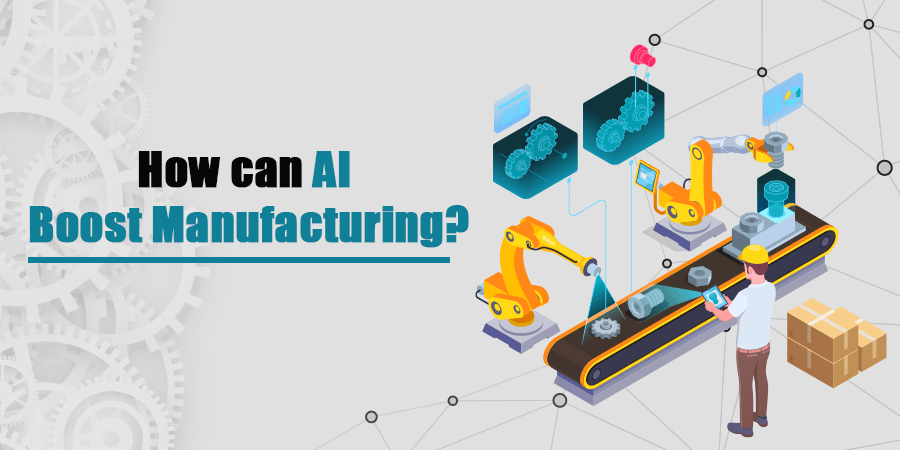
In the rapidly evolving landscape of manufacturing, Artificial Intelligence (AI) has emerged as a transformative force, driving unprecedented efficiency, optimization, and innovation across various facets of the industry. This article explores key use cases of AI in manufacturing, focusing on predictive maintenance, inventory management, production planning, and procurement. These applications represent a paradigm shift, empowering manufacturers to enhance operational excellence, reduce costs, and stay competitive in an increasingly dynamic market.
AI in Predictive Maintenance
Predictive maintenance is a cornerstone of modern manufacturing, and AI is at the forefront of revolutionizing how equipment and machinery are maintained. Traditionally, maintenance practices relied on scheduled checks or reactive approaches, leading to downtime and increased costs. AI in predictive maintenance changes this by leveraging machine learning algorithms to analyze real-time data from sensors and machinery.
The predictive maintenance model anticipates potential equipment failures by identifying patterns and anomalies in data. This proactive approach allows manufacturers to schedule maintenance during planned downtime, preventing unexpected breakdowns and minimizing operational disruptions. The result is not only increased equipment reliability but also substantial cost savings through optimized maintenance schedules and reduced downtime.
AI in Inventory Management
Effective inventory management is critical for manufacturing operations, and AI is bringing a new level of sophistication to this aspect. Traditional inventory management systems often struggle to adapt to dynamic demand patterns, leading to overstock or stockouts. AI in inventory management addresses these challenges by analyzing historical data, demand forecasts, and external factors in real-time.
AI algorithms can optimize inventory levels, ensuring that manufacturers have the right amount of raw materials and finished goods to meet demand without excess or shortage. This dynamic approach not only reduces carrying costs but also enhances customer satisfaction by ensuring timely order fulfillment. AI in inventory management contributes to leaner, more efficient supply chains and fosters agility in responding to market fluctuations.
AI in Production Planning
Production planning is a complex task that involves coordinating resources, scheduling operations, and optimizing workflows. AI is transforming production planning by analyzing vast amounts of data to make informed decisions and enhance overall efficiency. The integration of AI in production planning allows manufacturers to align production schedules with demand patterns, minimizing bottlenecks and optimizing resource utilization.
Machine learning algorithms can consider various factors, such as historical production data, market trends, and supply chain information, to optimize production schedules. This results in reduced lead times, improved production throughput, and increased overall efficiency. AI-driven production planning not only enhances operational excellence but also contributes to sustainability efforts by minimizing waste and resource consumption.
AI in Procurement
Procurement is a fundamental aspect of manufacturing, and AI is playing a pivotal role in optimizing sourcing and supplier management. AI in procurement systems streamline the procurement process by automating routine tasks, improving decision-making, and enhancing supplier relationships. These systems leverage advanced analytics and machine learning to analyze supplier performance, track market trends, and identify potential risks in the supply chain.
Automated procurement processes, such as invoice processing, purchase order generation, and vendor communication, enable procurement professionals to focus on strategic activities like supplier relationship management and strategic sourcing. This not only improves overall procurement outcomes but also contributes to cost savings, risk mitigation, and more efficient supply chain management.
Conclusion
The integration of AI into manufacturing operations is ushering in a new era of efficiency, optimization, and innovation. From predictive maintenance to inventory management, production planning, and procurement, AI is proving to be a transformative force. Manufacturers leveraging AI technologies stand to gain a competitive edge by enhancing operational excellence, reducing costs, and staying agile in response to market dynamics.
As the manufacturing industry continues to embrace the potential of AI, the synergy between human expertise and AI capabilities promises to redefine traditional practices and unlock new possibilities for growth and sustainability. The use cases highlighted in this article showcase the versatility and impact of AI in manufacturing, paving the way for a future where smart technologies drive continuous improvement and resilience in the manufacturing sector.
-
Transforming Finance: The Power and Precision of Artificial Intelligence
Introduction:
In the ever-evolving landscape of finance, technological advancements are playing a pivotal role in reshaping traditional practices. One of the most transformative technologies in this sector is Artificial Intelligence (AI). From demand forecasting to fraud detection, AI is revolutionizing various facets of the financial industry, enhancing accuracy, efficiency, and decision-making capabilities. In this article, we delve into different AI applications in finance, showcasing its impact on demand forecasting, asset management, private equity, portfolio management, due diligence, fraud detection, and risk management.

AI in Demand Forecasting:
AI Demand forecasting has transformed a critical aspect of financial planning for businesses. AI algorithms analyze historical data, market trends, and various external factors to predict future demand accurately. This enables organizations to optimize their inventory, reduce carrying costs, and enhance overall operational efficiency. With AI, businesses can make informed decisions based on real-time data, mitigating the risks associated with inaccurate demand projections.
Generative AI in Asset Management:
Generative AI in asset management optimized this process which involves making strategic decisions to maximize returns on investments. Generative AI, a subset of AI, has found its way into asset management processes. By leveraging generative models, asset managers can simulate various market scenarios, enabling them to make more informed investment decisions. This sophisticated technology assists in creating diverse portfolios that are resilient to market fluctuations, ultimately leading to improved performance and risk management.
AI Use Cases in Private Equity and Principal Investment:
AI in Private equity and principal investment has optimized the processes in these areas where precision and timely decision-making are paramount. AI provides valuable insights by analyzing vast amounts of data, helping investors identify potential opportunities and risks. Machine learning algorithms can evaluate the financial health of target companies, predict market trends, and assist in strategic decision-making, ultimately enhancing the success rate of private equity and principal investment endeavors.
AI for Portfolio Management:
Portfolio management is inherently complex, requiring constant monitoring and adjustment to align with market dynamics. AI algorithms can analyze vast datasets, identify patterns, and make real-time recommendations for portfolio optimization. This results in improved asset allocation, reduced risk, and better overall performance. AI in portfolio management using tools provide investors with a competitive edge, ensuring that their portfolios are agile and responsive to market changes.
AI in Due Diligence:
The integration of AI in due diligence is particularly beneficial in scenarios where time is of the essence, such as mergers and acquisitions, where quick and accurate assessments can be a decisive factor. Automated due diligence platforms powered by AI can efficiently review and analyze extensive documentation, contracts, and financial records, identifying potential risks and opportunities. This not only accelerates the due diligence process but also ensures a more comprehensive and accurate assessment, minimizing the likelihood of oversight.
AI in Fraud Detection:
The rise of digital transactions has increased the complexity and volume of fraudulent activities in the financial industry. AI in fraud detection plays a crucial role by continuously monitoring transactions, identifying patterns, and detecting anomalies indicative of fraudulent behavior. Machine learning models can adapt and evolve to new fraud tactics, providing financial institutions with a proactive approach to combatting financial fraud and safeguarding customer assets.
AI in Risk Management:
Effective risk management is at the core of financial stability and success. AI in risk management involves analyzing large datasets to identify potential risks, assess their impact, and formulate strategies to mitigate them. Whether it’s credit risk, market risk, or operational risk, AI-driven models can provide real-time insights, enabling organizations to make informed decisions to protect their investments and navigate uncertain economic landscapes.
Conclusion:
The integration of AI into various facets of finance is a testament to its transformative power in optimizing processes and decision-making. From demand forecasting to risk management, AI is revolutionizing the financial industry, offering unprecedented efficiency and precision. As financial institutions continue to embrace these advancements, the future of finance is likely to be defined by the seamless integration of AI technologies, propelling the industry toward new heights of innovation and success.
-
Exploring the Use Cases and Benefits of the Metaverse
The metaverse is a term used to describe a virtual world where users can interact with each other, as well as virtual objects and environments. This concept has been gaining traction in recent years and is being developed for a variety of different use cases and benefits. Here are some examples of how the metaverse is being utilized and the advantages it offers:
- Gaming – One of the most popular use cases for the metaverse is gaming. Metaverse gaming allows users to immerse themselves in a virtual world and interact with other players in real-time. Games can range from simple arcade-style games to more complex RPG (role-playing game) titles. The metaverse offers a new level of immersion and interactivity for gaming experiences.
- Social Interaction – Social apps in the metaverse allow users to connect with other users in the virtual world. They can be used for things like chatting, sharing media, and even dating. The metaverse offers a unique way for users to socialize and interact with each other in a virtual environment.
- Education – Educational apps in the metaverse are designed to help users learn new skills and knowledge. They can be used for things like language learning, virtual tours of historical sites, and more. The metaverse offers a new way for users to learn and engage with educational content in a virtual environment.
- Business – The metaverse offers a new way for businesses to interact with their customers. Business apps in the metaverse can be used for things like virtual meetings, online training, and even virtual trade shows. This offers a new way for businesses to connect with their customers and offer new services.
- Entertainment – The metaverse can be used to create a new form of entertainment. For example, virtual music concerts, movies, and theater performances in the metaverse. It offers a new way for users to engage with entertainment content and experience it in a virtual environment.
The benefits of the metaverse are vast, from the level of immersion it offers to the interactivity and personalization of experiences. It offers a new way for users to engage with content and interact with others, regardless of their physical location. The metaverse can be accessed from anywhere, at any time, making it a convenient and flexible way to engage with the virtual world. It also offers new opportunities for businesses to connect with their customers and offer new services.
In conclusion, the metaverse offers a new way for users to engage with the virtual world, and it’s expected that it will be widely adopted in the future. It’s being developed for a variety of different use cases, from gaming and social interaction to education and business. The metaverse offers a new level of immersion, interactivity, and personalization that traditional online experiences cannot offer, making it an exciting new technology to explore.
-
Exploring the Possibilities of Metaverse App Development
In virtual reality, the metaverse is a place where people can talk to each other in a shared space. This idea has been popularised by science fiction books, but in recent years, improvements in technology have made it possible to build a metaverse. Because of this, many companies and developers are starting to think about making metaverse apps, which can be used for everything from games and entertainment to education and business.
One of the key technologies that makes the metaverse possible is virtual reality (VR). VR technology lets people feel like they are in a digital environment, and it is getting better and easier to use. With the release of new VR headsets like the Oculus Quest and the HTC Vive, it’s getting easier for developers to make truly immersive VR experiences. 5G networks will also make it faster and more reliable to send and receive data, which is important for metaverse apps to work well.
Blockchain is another important technology that is affecting how the metaverse grows. Blockchain is a technology that makes transactions safe and clear by using distributed ledgers. In the metaverse, blockchain can be used to make a decentralised platform where users can own and trade virtual assets like virtual land or in-game items. This could create a new economy in the metaverse where people can make and sell virtual assets to make money.
Playing games is one of the most common ways people use the metaverse. Many companies already make games that take place in virtual reality. For instance, “EVE Online” is a massively multiplayer online game, and “Minecraft VR” is a popular virtual reality game. In the future, there will likely be more and more games that take place in the metaverse. Not only will these games be more immersive, but players will also be able to meet and talk to each other in a shared virtual space, which will make them more social.
The metaverse could also be used to make big changes in education. Students can use virtual reality to go on virtual field trips to places they might not be able to visit in real life. They can also do experiments and use scientific tools that they might not have access to in their school or community in virtual labs. With the power of metaverse, students can also work together on projects and share information in real time, which will be very helpful for group projects or research.
Businesses are also starting to look into what the metaverse has to offer. Companies can use virtual reality to hold virtual trade shows where vendors can show off their products and users can talk to the vendors and other users in a virtual setting. This can save companies a lot of time and money because they won’t have to travel to a physical location to go to a trade show. People from all over the world can meet and work together in a shared virtual space during virtual conferences in the metaverse. This can help businesses run more smoothly and effectively.
The metaverse is still in its early stages of development, and there is still a lot of work to be done before it becomes a reality. But because technology is getting better and more companies and developers are getting interested, it is likely that the metaverse will start to take shape soon. As a developer, now is a great time to work on metaverse app development because there are so many ways to be creative and think of new ideas.
It’s important to remember that the growth of metaverse raises some concerns, like user privacy, security, and government rules. It is important for the developer to think about and implement these things.
-
All about metaverse healthcare solutions
The Metaverse is a decentralized virtual world that is powered by blockchain technology. It is a new type of online platform that allows users to create and interact with virtual objects, events, and experiences in a shared virtual environment. One of the key features of the Metaverse is the ability to use virtual healthcare solutions, which offer users a range of options for accessing healthcare services in the virtual world.
Virtual healthcare solutions in the Metaverse are digital platforms and tools that are designed to provide healthcare services online. They can include telemedicine platforms, virtual clinics, and other types of digital healthcare services. Virtual healthcare solutions in the Metaverse offer users a range of tools and resources for accessing healthcare services, including video conferencing, document sharing, and online consultations.
Virtual healthcare solutions in the Metaverse offer several benefits over traditional healthcare services. For example, they are flexible and can be accessed from anywhere with an internet connection. They are also cost-effective, as they do not require users to travel or pay for in-person consultations. Additionally, virtual healthcare solutions are typically more efficient, as they allow users to access healthcare services in real-time, regardless of location.
In the Metaverse, virtual healthcare solutions are used for a variety of purposes. For example, they can be used to provide telemedicine services, such as online consultations with doctors or other healthcare professionals. They can also be used to provide virtual clinics, where users can access healthcare services online.
One of the key features of virtual healthcare solutions in the Metaverse is the ability to customize and personalize the service to suit the needs of the users. For example, users can create their own virtual healthcare environment, or customize the layout and design of the service to suit their needs. This offers users a level of flexibility and control that is not possible with traditional healthcare services.
Another key feature of virtual healthcare solutions in Metaverse is the ability to use virtual reality (VR) technology. VR allows users to fully immerse themselves in the virtual world and interact with healthcare professionals in a way that feels natural and intuitive. This offers users a more immersive and engaging experience when accessing healthcare services in the Metaverse.
Overall, virtual healthcare solutions in the Metaverse offer users a range of options for accessing healthcare services in the virtual world. They are flexible, cost-effective, and efficient, and they offer users a level of customization and control that is not possible with traditional healthcare services. As the Metaverse continues to grow and evolve, it is likely that virtual healthcare solutions will play an increasingly important role in the virtual economy.
-
All about metaverse application development
Metaverse application development refers to the process of creating applications or software programs that are designed to run within a metaverse, or virtual reality shared by multiple users. These applications can be used for a variety of purposes, including entertainment, education, communication, and more.
To develop a metaverse application, developers typically need to have a strong understanding of virtual reality technology and how to create immersive and interactive experiences within the metaverse. This may involve using specialized tools and software, as well as working with 3D graphics and other media.
One of the main challenges in metaverse application development is the need to consider the specific needs and preferences of users within the metaverse. Applications that are designed for the metaverse may need to be more interactive and immersive than traditional software, and developers need to consider how users will interact with the application and what types of experiences they are looking for.
Another challenge is the need to consider the technical limitations of the metaverse platform. Developers need to ensure that their applications are optimized for performance and can run smoothly within the virtual reality environment.
Overall, metaverse application development presents both exciting opportunities and significant challenges. With the right technology and design, developers can create unique and immersive applications that can provide a wide range of benefits and experiences for users within the metaverse.
-
How to build a Metaverse dApp with Unity
This tutorial shows you how to use Unity to create a prototype metaverse dApp. Users of the demo software can access a 3D environment by scanning a QR code with a Web3 wallet and logging in as an Avatar.
The creation of an all-immersive metaverse (think Ready Player One) is still a work in progress, but Web 3.0 technical improvements are assisting in the process. A variety of modern Web 3.0 applications are available today, and their creators are cultivating these components as a foundation for the metaverse’s future development.
As Web 3.0 products like games, virtual events, and virtual social networks gain popularity, entrepreneurs and businesses are looking into metaverse development company in addition to developers. Although there are many different technologies and tools that can be used in metaverse development, Unity is one of the most widely used tools for creating Web 3.0 or metaverse dApps.
Therefore, if you’re also interested in producing or learning how to develop metaverse Web 3.0 applications with the Unity tool, this article offers a simple guide. When creating dApps and games, Unity is a very adaptable programme that offers lots of customization options. It is a stable platform that programmers adore using. It is simpler to create the next-generation metaverse environments and dApps with Unity thanks to its built-in tools, features, asset store, graphic components, and cross-platform operability. This tutorial won’t be able to cover everything, but it will give you a solid understanding of how to create a metaverse dApp with Unity by using a sample dApp as a guide.
An introduction to the creation of Unity assets
With Unity, creating a 3D world and avatar for a metaverse dapp is relatively easy. A wide range of components and assets are available in Unity’s asset store for building 3D environments and characters. The MedievalSharp-Regular SDF asset will be utilized to develop this particular prototype metaverse dApp. The creation of a 3D world featuring a medieval library and an avatar decked out in armor and period garb.
Backend platform for Web 3
A Web 3.0 backend platform is utilized for the last step of integrating the Web 3.0 login wallet. SDKs and Web3APIs, required for incorporating crypto into your metaverse dApp, are provided by the Web 3.0 backend platform. These SDKs help users obtain permission to access their cryptocurrency wallets, enabling them to sign in to any dApp or online platform. It’s crucial to choose a Web 3.0 development platform that is compatible with all of the leading tenets and blockchains.
Web 3 wallet login
You can choose from a range of Web 3.0 login and Web 3.0 authentication mechanisms depending on the number of users in your metaverse. Metamask or Wallet Connect are suggested for crypto-savvy users, while normal users can use email-based Web 3.0 authentication. The metaverse dApp utilized in this example uses Wallet Connect.
Services for Unity Development
By combining their brilliant imagination, real-time 3D modeling, blockchain knowledge, and Unity development skills, Unity developers assist in creating financially beneficial metaverse places. By including features like cross-chain interoperability, they concentrate on creating metaverses that are future-proof and are not constrained to a single chain. Our developers make certain that smart contract events and other blockchain events are properly synced and indexed using cutting-edge APIs, servers, and dashboards (databases).
Complete game development
We offer full-cycle Unity development services, including everything from API execution, testing, and debugging to system design, wireframing, prototyping, UX/UI design, and architecture development.
Platform-agnostic app development
We create Web 3.0 and metaverse games that run on a range of desktop and mobile operating systems, including Windows, macOS, Android, and iOS, as well as PlayStation, Xbox, and WebGL.
Services for integration
API integration, webhook integration, Unity Analytics, Unity Cloud Build, and Unity Multiplayer integration are all integration services that we offer.
Online gaming
By fusing the strength of Blockchain technology with Unity programming tools, we create a personalized decentralized 3D metaverse.
Development of apps using AR/VR
Through immersive and intensely interactive user-centric environments and applications, we provide amazing AR/VR experiences.
Gaming in 2D and 3D
We create advanced 2D/3D games that run on many hardware and operating systems using Unity development tools.
If you need Unity development services, we can assist you thanks to our agile development process, extensive unity experience, and blockchain know-how.
-
Metaverse solutions for virtual events
If you’ve been reading about the metaverse, you may have read a number of stories about it recently. Users can interact, meet, socialize, and perform various jobs traditionally done in the real world in a wholly virtual setting thanks to a network of 3D virtual worlds known as the metaverse. People can enjoy and explore the world that has been digitally made using digital avatars that can walk, run, laugh, and execute all human actions.
The metaverse has proven useful for many growing and established businesses. This is a result of the prominence given to convenience in today’s society. Thanks to the metaverse, people can virtually do everything they desire while sitting in their homes. Thus, one major sector that has been greatly impacted by the creation of the metaverse is events. Planning virtual events in the metaverse is becoming more and more popular.
Learn more about metaverse events, such as how they differ from actual events.
What is a virtual event in the metaverse?
The virtual, interactive, and widely disseminated online gatherings of people are known as metaverse events. Unlike real-world events, metaverse virtual events have no physical bounds and are only limited by the imagination. Anyone in the world is welcome to attend and take pleasure in these gatherings.
The ability of these metaverse events to create an immersive setting makes them special. The exercises take place in a virtually created environment. The event’s location, stage, and venue are all exact replicas of actual experiences. The performers, visitors, and other attendees are all represented by digital avatars at the event. These human-like avatars serve as our helpers in the online ecosystem that has been created. Through digital avatars, people can congregate with friends while seated at home and dance, clap, laugh, and sing.
Virtual events have gained popularity in the metaverse. As a result, the number of sites for staging metaverse events has also increased dramatically.
Advantages of metaverse virtual events over traditional events
You might be aware that several industries are working together to develop one of the most ambitious metaverse event platforms. However, it is projected that in the upcoming years, the majority of industries currently employing conventional models will switch to the metaverse.
Here are some strong justifications for it:
According to some, metaverse events offer a true-to-life experience. It makes it easier for people to take part in international activities and communicate with virtual avatars in real-time.
Global corporate expansion is made possible via platforms for metaverse events. Unlike in-person events, metaverse events help people get beyond geographical restrictions. An event will consequently draw a larger audience and be more interesting.
There are incredible virtual events in the metaverse. The adoption of technology like blockchain and NFTs, one of its applications, is to blame for this. NFTs are currently the only kind of tickets available for these virtual events. As a result, they acquire value that lasts forever. At any time, buyers can make money by reselling them.
What applications are there for metaverse virtual event solutions?
Virtual events solutions, such as immersive metaverse event platforms, NFT-powered ticketing, live streaming, global networking, and audience engagement, are becoming increasingly widespread as we move into the metaverse era. The promise of the metaverse’s exponential growth is soon to be realized by the whole event-planning industry. As a result, many virtual event solutions for various businesses have been developed.
Meetups in the metaverse for business
Metaverse meetings are a cutting-edge choice, especially for the corporate sector. Business meetings and interview scheduling have become considerably easier thanks to the metaverse virtual events solutions. Employers can interact closely with their employees in an interactive setting, even from a distance. The meeting places of the metaverse are designed to be precise duplicates of real meeting places.
Performances in the metaverse for the entertainment industry
Virtual concerts are the kind of events that have generated a lot of attention in the metaverse. Virtual concerts that are immersive are made. The audience can converse, dance, laugh, and sing along with one another just like at live events while using digital avatars.
Long story short, whether it be music, stand-up comedy, art exhibitions, or workshops, the metaverse is well-equipped to enhance the complete virtual event experiences.
Conclusion
A rising number of people are using metaverse virtual events to connect with audiences and potential clients around the globe. They have a lot of benefits over typical live events. The need for metaverse event platforms is rising as a result of its capacity to eliminate financial, spatial, and physical constraints. Others have already established themselves as industry leaders and trend-setters by developing their own metaverse event platforms, while some people are still trying to understand the enthusiasm. Therefore, it is easy to predict that the metaverse events platform alternatives will influence the events industry going forward.
-
Metaverse Use Cases and Benefits
Internet technology is always evolving and providing consumers with amazing options. We have all experienced the power of digital evolution, from using static webpages to interacting with web 2 experiences. The next step in this progression is the Metaverse.
The original Metaverse idea, which Neal Stephenson conceived in 1992, has been updated with the help of IT specialists from all across the world. The phrase was first used by him in a science-fiction book, and it is now commonplace in modern technology.
The idea of the Metaverse has been around for more than ten years, but it has recently gained popularity due to announcements of related projects from major corporations like Facebook and Microsoft. As more individuals become aware of this persistent shared virtual world’s intriguing possibilities, the excitement surrounding it intensifies.
During the recent epidemic, when people sought to avoid in-person interaction, businesses created remote working practices, and people embraced digital ways of communication, the idea of the metaverse gained prominence. People were interested in learning more about the Metaverse and comprehending its use as a result of this development.
A very interactive three-dimensional virtual world is what the Metaverse symbolizes. In the Metaverse, users can use their custom avatars to explore the environment and exchange real estate, buildings, and other digital goods. These avatars are exact duplicates of the user and are equipped with all of a human’s capabilities.
Both controlled and decentralized metaverses can be created by businesses. But now that other businesses are already reaping the rewards of blockchain technology, there is a greater need for a blockchain-based Metaverse.
What is Metaverse?
There are numerous definitions of the Metaverse that reflect a wide range of viewpoints. We must envision a three-dimensional network driven by virtual reality (VR) and augmented reality in order to rapidly understand what the term “Metaverse” means (AR). The key qualities of the metaverse are that it is durable, self-sustaining, limitless, interoperable, and in real-time.
- It is persistent if it continues to exist despite the user’s absence.
- Numerous contemporary users and VR worlds are supported by Infinite.
- Self-sustaining implies that people are able to procure their needs while also making money in the Metaverse.
- Users can transport their avatars and other virtual items between Metaverse projects with the aid of interoperability.
- Users are able to enjoy life experiences in real time.
What advantages does the metaverse offer?
In order to network and communicate online, more people are turning to virtual communities and technological means of communication like video and web conferencing.
The Metaverse offers consumers a variety of real-world capabilities in a 3-D immersive world to enhance their current digital experience. The following are the main advantages that Metaverse offers us.
Addressing the issues with remote work
All of the current issues with remote work may be solved with metaverse. It gives managers access to a virtual setting where they may interact with employees (as represented by their avatars), read their body language, and simulate in-person interactions. By managing the staff inside a virtual office, the company may also stop issues like time theft and goldbrick inside the office.
An excellent resource for medical professionals
Healthcare providers and medical workers who were previously unable to visit patients due to regional restrictions would benefit greatly from the metaverse. They can interact with the patient and gain a thorough understanding of their health state in the Metaverse, a virtual environment.
Enhancing the excitement of online games
The majority of Metaverse games available today are decentralized and offer play-to-earn gaming with an integrated economic mechanism. In-game assets in the form of NFTs are available for users to buy, sell, and trade in these games. Players find it appealing to imagine their avatars exploring the enormous virtual area.
Providing access to virtual tours
Although traveling might be adventurous, not everyone can go to the places they want to go. The Metaverse fills this gap by enabling people to travel virtually to locations they are unable to travel to physically. An advanced virtual environment that delivers the first-person experience is being created using the combined capabilities of the Metaverse, AR, and VR.
Benefits are monetized
The Metaverse is attracting a lot of attention. Others are looking for ways to make money, while others are development aficionados looking to harness the ecosystem to construct their business-specific projects. Fortunately, the Metaverse has the capacity to satisfy both parties needs. Anyone can create a pertinent project on top of the ecosystem thanks to the open-source nature of the Metaverse. People can also become ordinary users in the ecosystem and create and trade NFTs to make money.
What difficulties are most likely to arise in the Metaverse?
The metaverse is unquestionably the most significant advancement in virtual reality, and it will alter how we view online communication and social media interactions. However, the Metaverse is still developing and is still in its early stages. As with any new technology, the Metaverse has some possible drawbacks. In light of this, let’s look at those restrictions.
In contrast to what we see in the physical world, it can be difficult to recognize people in the Metaverse. Through an avatar’s voice, characteristics, and facial expressions, users must be verified.
To achieve their goal, scammers or bots that are looking to ruin someone’s reputation may pose as an avatar.
Privacy issues are a significant obstacle. The adoption of VR and AR by the Metaverse exposes users to the risk of their personal information being leaked because these technologies come with cameras and unique IDs.
Please take note that not all Metaverse projects are linked with these challenges. One can easily design and launch a custom virtual environment, avoiding those potential difficulties, with thorough knowledge of Metaverse development company and a qualified team.
-
Subscribe
Subscribed
Already have a WordPress.com account? Log in now.
 All About Metaverse